Five Things a Plumber Checks on Your Water Heater, and What a Bad One Looks Like
A water heater doesn't usually fail all at once. It gives five separate warnings first, if you know where to look.
September 8, 2026 · 4 min read
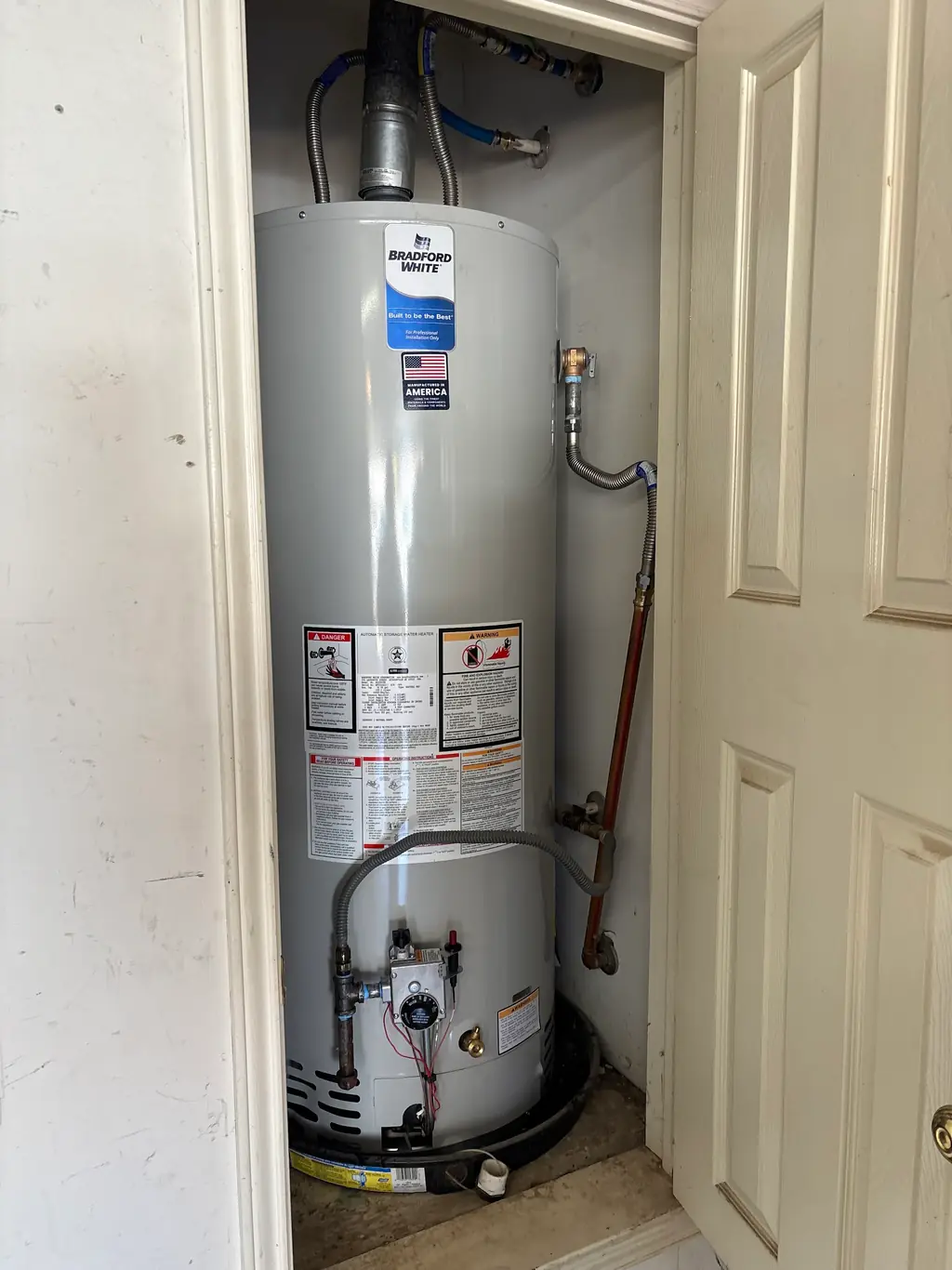
Most water heater problems don't start with a flood. They start small, in one of five specific places, and by the time the tank itself has failed, most of those warning signs have already been visible for months. Here's what an actual inspection covers, not the whole tank at once, just the five points that tell a technician whether the unit is aging normally or heading for trouble.
None of these five things require tearing into the unit to check. A technician doing an honest inspection can look at all five in the time it takes to walk around the tank once, which is part of why skipping this kind of check gets expensive later. It's rarely the tank material itself giving out that turns into an emergency call. It's one of these five going unnoticed long enough to take the whole unit down with it.
1. The temperature and pressure relief valve
This is the safety valve on the side or top of the tank, and its job is to open and release pressure if the tank's internal pressure or temperature climbs past a safe limit. A technician checks that it isn't weeping water constantly, which usually means it's cycling open due to thermal expansion in a closed system, or because the tank is genuinely running hotter than it should. They also check that the discharge tube routes downward toward the floor rather than capped off or pointed sideways, since a blocked or modified discharge tube defeats the entire purpose of the valve.
2. The gas flex connector
On a gas water heater, the flexible connector running from the shutoff valve to the unit gets checked for kinks, corrosion, and excess length that's been coiled or bent sharply just to make it fit. Corrosion on a gas connector, especially green or white buildup near the fittings, gets treated as a real hazard, not cosmetic wear. So does a connector stretched tight with no slack, which puts ongoing stress on the fittings at both ends.
3. The flue or venting
Atmospheric gas water heaters rely on a vent running up through the roof to pull combustion exhaust out of the house. A technician looks at the draft hood, the joint just above the tank, for rust staining or soot, both of which point to backdrafting, where exhaust gases are spilling back into the room instead of venting outside. On a power-vent or tankless unit, the check is different: confirming the intake and exhaust pipes are clear, properly pitched, and not blocked by anything nesting or gathering inside the termination point outside.
4. The drain pan
Most tanks installed inside a house, especially above a finished space, sit in a metal or plastic drain pan with its own drain line. The pan exists to catch a slow leak before it reaches the floor. A technician checks the pan for cracks and checks whether standing water is already sitting in it, which is usually the first physical evidence that the tank itself has started to weep from a seam or fitting.
5. The service shutoff
Every water heater needs a dedicated shutoff, water and gas, that isn't seized, corroded shut, or blocked by something stored in front of it. A shutoff that doesn't turn easily turns a routine repair into a longer job, because the technician has to isolate water or gas further back in the system instead of right at the unit. It's a small thing until the day it isn't.
What ties all five together
Most tank water heaters are built to run for a bit over a decade, but the tank material itself is rarely what actually fails first. It's almost always one of the five things above wearing out quietly while the tank keeps working, a valve that's stopped sealing, a connector that's corroded, a vent that's no longer drafting cleanly. On top of the five, hard water plays a role here too. In areas with mineral-heavy water, tankless units in particular need their heat exchanger flushed periodically, since scale builds up inside those narrow passages faster than it does inside a standard tank and gradually chokes off flow and efficiency if it's never addressed.
How often this is worth checking
A once-a-year look at these five points, especially ahead of a Central Texas summer when more showers and more laundry mean the unit is working harder day to day, catches most of what would otherwise turn into an after-hours emergency call. None of the five checks take the unit out of service for long, and most of them are visual or functional rather than invasive. It's a fraction of the disruption of dealing with a tank that's already failed and flooded a closet or garage on its way out.
Shelton Plumbing has specialized in water heater repair and replacement, tankless and traditional both, across Georgetown and Central Texas since 1989. If any of the five spots above sound like something you've noticed on your own unit, or you just want it looked at before it becomes a bigger job, call (254) 751-9655. We can't put a number on a repair over the phone, but we'll give you a precise, on-site estimate before touching anything.
Shelton Plumbing — (254) 751-9655
Call (254) 751-9655More articles
Winterizing Your Central Texas Plumbing Before the Next Hard Freeze
Central Texas homes aren't built the way northern homes are, and that's exactly why a single overnight freeze can do so much damage.
Hard Water in Central Texas: What It's Doing to Your Pipes and Water Heater
The water doesn't look any different coming out of the tap. What it's doing inside your pipes is a different story.